Showing posts with label Palestine. Show all posts

Wednesday, August 3, 2011

July, 2011: Greenhouse Growing


This greenhouse is haven to life on the south side of our family home in Portland. Fed by compost of the previous year and watered by rain runoff from the roof of both house and garage, six varieties of tomato plants grow eight feet to the ceiling to provide a six month harvest. The spinach is done, with peppers soon to come and a variety of herbs in constant supply. Oregon weather has been unseasonably cool, including no days yet beyond 90 degrees F. (32 C.). Inside this area temperatures could rise beyond 122 (50 C.) without the widows open! All that grows there would perish. With the windows open in summer, life flourishes.

As Fall and winter comes, windows are closed and the sunshine adds 20 degrees Farenheit to whatever the outside temperature may be. Frost never arrives. When the furnace must heat our home, exhaust is sent into the greenhouse to help warm it and the growing season is extended through December. After washing our dirty clothing, the vent from the dryer also finds its way here, providing moisture enough to nurture a natural process where new plants sprout by Spring to reveal the death of the old crop to be merely an illusion. Life finds a way to blossom again, windows are opened, and the bees return to pollinate. A new harvest begins.

Of course it required labor to build this structure and effort to maintain it. Completed almost entirely with recycled materials (the windows were once part of a college gymnasium), some creative thinking was needed to implement a plan that would reflect harmony with the home and work well in the outside environment. Through trial and error, we build, sometimes learn from our errors, and make use of what resources are available. At the end of the day, we sleep fairly well if we can say that we simply did our best. Not perfect. But as good an environment for life to grow as may be possible under circumstances quite beyond our control.

The most sobering event of this month for our family was the passing of the only son of my step sister Carrie. My nephew Brian Hutton died in his sleep of a heart condition just prior to his 28th birthday. The funeral came the day before my own birthday when I turned 62. The funeral and burial brought family and friends together in what was Brian`s last gift to us: a celebration of his short life that might inspire each of us to live more fully before we also are harvested. The windows of our hearts were opened by grief and yet life began to blossom again. I had not known before that Brian was homosexual, and yet was here pleased to grieve with his first and only partner. His friends revealed the abundance of his life, including a phrase he would exclaim in good humor whenever faced with an ironically odd or apparently sad situation: ``Happy Birthday!`` Brian has now transitioned to another realm of life that is in the future for us all. He will be remembered fondly and yet will always be missed. ``Happy Birthday`` Brian!

Kristine and I continue to follow news from the Middle East. People throughout Syria, Palestine, the Gulf, and North Africa continue their efforts to open windows and build environments to benefit their lives. Our friend Kathy Kelly was among some 600 activists associated with 10 boats who sought to sail from Greece to Gaza in opposition to the Israeli blockade of Gaza. Detained by Greek authorities, under pressure from Israel and the U.S., the ``Freedom Flotilla`` to Gaza gained many days of international publicity which revealed the inhumane conditions under which 1.5 million people live under military siege. Mazin Qumsiyeh, who had provided us a tour of areas near Bethlehem being demolished by Israeli bulldozers last year at this time, was arrested by the Israeli military last week (and later released) for taking photos while witnessing the destruction of an olive orchard (including some trees over 2,000 years old). Hopefully such sacrifices will be appreciated, over time, as the struggle for justice goes on.

To, learn from our errors and those of others more people need to share their stories. An emotional evening of storytelling attended by 40 people in Portland last week included eight who had spent time in Palestine during recent years. For my story/contribution I described an event I neglected to write about last July: On a very hot day, Kris and I had enjoyed a fine lunch at the Wi`am Center for Conflict Resolution in Bethlehem where a bag full of left-over falafels and pit bread was given to us – and had just finished being herded through the security maze at the Israeli Military Checkpoint into Jerusalem. Finished with our ordeal, we witnessed a Muslim family on the Jerusalem side being denied re-entry into Bethlehem where they lived. Papers for the husband and wife and daughter were in order, but the Israeli soldier in charge was not satisfied with the permit for their baby. The wife and young daughter were near tears and the husband was close to shouting at the soldier ``But we only want to go home! We were allowed into to Jerusalem to see our children`s grandparents, but now you will not let us return home?!`` Definitely shouting in response, the heavily armed soldier replied ``Shall I call security? I am the one in charge here! Do you want to be arrested?!``

I wondered what would Gandhi do in a situation like this and then walked back to the soldier whose face was flushed with anger. ``Excuse me``, I said, ``but would you like my falafels?`` Making a joke about my somewhat oversized midsection, I patted my stomach and observed how wonderful these falafels were and how I really did not need them. The soldier at first was surprised, then looked confused, and then smiled while quietly saying ``No, thank you.`` I then turned to the mother and daughter who were sitting on the cement floor and asked them if they were hungry. The mother shook her head, but the daughter nodded vigorously a ``Yes``. Both the husband and wife (and, I think, the soldier) chuckled at this and I gave her my bag of falafel. Satisfied that I had, at least, disrupted the escalating conflict, I walked to where Kris was waiting and then turned for a last look as we walked away. It appeared like the soldier might allow the family to pass….

From my point of view, I am not much of a peace activist. There was little risk to me at that military checkpoint. The greater risk is that, little by little, we lose our humanity my not getting involved at all. This month and accurate accounting of my overt peace activism would include attending three meetings in four weeks (one to help prepare a fundraising mailing, another to provide input into planning a few future events, and the third to listen to others experiences while telling my 5 minute falafel; story. Together with a few emails, his totals maybe 10 hours of activity in 31 days = about 20 minutes per day on average = less time than I spend reading a newspaper each morning! Put that way, I really am not much of a role model revolutionary!

By way I defending me from the attacks waged by my over critical self, much of this month has been either devoted to my half-time summer teaching responsibilities or performing tasks around the house (as we enjoy other guests and prepare for our friends Stany and Shanty to arrive later in August from India). I also am doing my best to feel unapologetic about simply taking time for relaxing bicycle rides, watching an occasional movie (like the last of Harry Potter) or sports (Women`s World Cup Soccer), as well as making sure the greenhouse is minimally cared for. Ah yes, remember the greenhouse?

For my more frantic colleagues who share my desire to build a better world, let us remind ourselves of the words of St. Francis of Assisi when he was asked what he would do if he knew the world would end tomorrow(maybe the entire world, or maybe just our personal time to leave this body behind and leave this reality). He said ``I would cultivate my garden.``

In writing this months` entry, I am cultivating a few thoughts for consideration. Let us take care of our greenhouse, whatever that metaphor may mean to you. Let us take at least some time to tell others how much we care about them, and to act in small ways to show we mean it. Yes, and let us enjoy this life while it is granted to us, for tomorrow is really not much in our hands.

Sunday, July 18, 2010

Week 31: Jerusalem


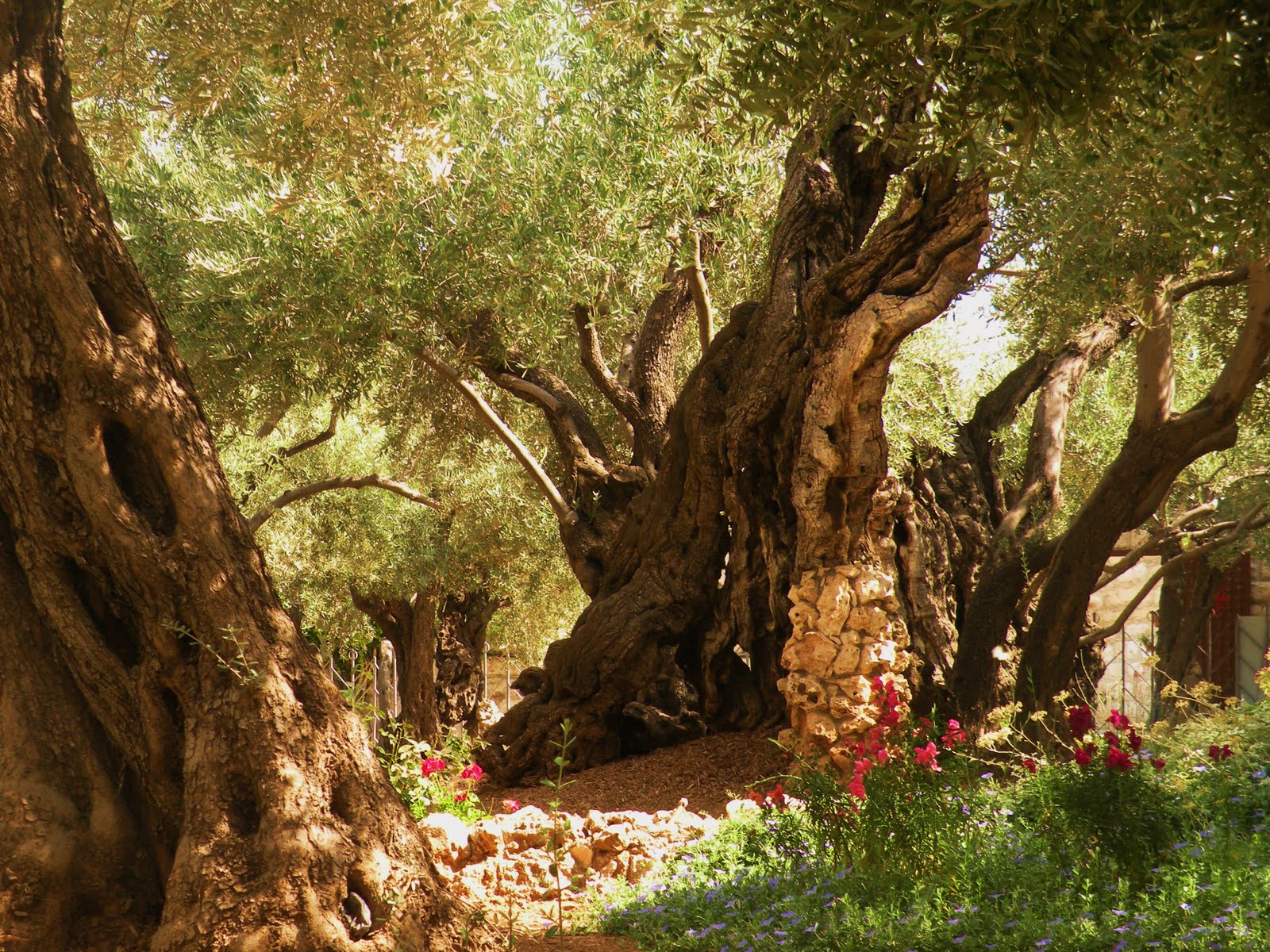
At Gethsemane a small grove of olive trees have been preserved with some, like the one featured here, now over 2,000 years old. This tree may well have known Jesus, as he prayed for guidance at this place prior to giving himself up for arrest and crucifixion. It has seen the passage of time from Roman rule, to the Byzantinian period, thru the Crusades, to Islamic rule and the Turkish Empire, thru the British, Jordanian, and Israeli rulers of the past 100 years.

For me this tree in the olive grove next to Church of Gethsemane has a spiritual significance beyond any other location Kris and I visited in Jerusalem during our seven days there. Sites holy to Judaism, Christianity, and Islam are present throughout Old Jerusalem, as well as just outside the historic city walls. There is the Dome of the Rock (where Abraham is said to have been willing to sacrifice his son about 4,000 years ago), the Western Wall (what remains of the Second Jewish Temple, destroyed by the Romans in AD 70), the Church of the Holy Sepulchre (built on the location where tradition says Jesus was both crucified and was buried), and the Al-Aqsa Mosque (the third most holy place in Islam, after Mecca and Medina -- nearby the Dome of the Rock where Mohamed is believed to have been raised into heaven). Kris and I visited these places and many more, especially sites associated with Jesus` Stations of the Cross and his mother Mary (who, according to Orthodox Christians, has her remains at Mary`s Tomb). While the historical accuracy of many locations is questionable (the site said to be where the Last Supper occurred was located just above King David`s Tomb), the faith of believers is very real.

Sadly, this faith has made Jerusalem a battleground for centuries, with soldiers on the streets of the Old City even today. As told by excellent displays at the Museum at David`s Tower, Jerusalem has been destroyed six times and rebuilt seven. The blood of the innocent is everywhere -- shed, for example, by Christian Crusaders who conquered the city and slaughtered every Jewish and Muslim man, woman, and child while celebrating their victory. No such extreme brutality has been ever been manifest under either Islamic or Jewish rule. What might Jesus (with his message of suffering love) have to say about that? If we take a little time to ask the old olive tree, I think we can hear an answer....

Today over 80% of Old Jerusalem (within the walls) is Palestinian Muslim, with Jewish immigrants forming a majority of the population in the areas of the city built since the 1860s. These Muslims, as well as those residing in East Jerusalem, are in territory occupied militarily by Israel since the 1967 War. No nation (other than Israel) recognizes this occupation as legal under international law (though both major parties in the U.S. consistently support it with military aid that has now reached record levels). Soldiers armed with automatic rifles are stationed throughout the Old City, but not elsewhere in Jerusalem: Here the Muslims are seen as an ongoing security threat. Although they were allowed to remain after the 1967 War (and were even given Israel citizenship), not one Muslim I spoke with on the streets will vote, and all call themselves Palestinian (not Israeli).

Zahir, our Muslim guide while visiting Mt. Moriah (The Temple Mount which includes the Western Wall and Al Aqsa Mosque), showed us the bullet holes in the Dome of the Rock (sacred to all three religions) made as Israeli soldiers entered the holy place in 1967 killing many who had taken refuge there. With our own eyes Kris and I then observed armed Israeli soldiers enter the Dome (now a mosque), completely violating its sanctuary even now. Witnessing this intrusion, Zahir went on to tell us how he, as a Muslim of under 50 years of age, is not allowed to worship inside Dome. Prior to the year 2000, Muslim policy allowed Christians and Jews to freely enter this site that is sacred also to their faiths. Israeli state policy now limits entry to the Dome by anyone they choose to exclude, including all tourists, Christians, and Jews. Any complaint can lead to arrest and detention without trial.

Random conversations with Israeli soldiers and many others continue to blame such policies on security concerns caused by terrorism. They often see Zionism (which requires Israel to be a majority Jewish state with its capital a united Jerusalem) as the only protection against an historically hostile world. I am reminded of an aspiring actor on a bus who told Kris and I that even the United Nations supports the terrorists. This otherwise very rational person would agree with the man I talked to while he played with his dog: ``the entire world is critical of us, and the whole world is wrong``. The roots of such statements run deep into the anti-antisemitism of Crusaders who labeled Jews as Christ killers, the pogroms common through hundreds of years in Europe and Russia, and could be easily felt by Kris and I as we walked through the Holocaust Cellar (near the Tomb of David) where pictures abound of Nazi brutality and one can see soap made from the bodies of those exterminated in German concentration camps.

At Ecce Homo (a former Franciscan convent where we stayed in Jerusalem), a conversation over dinner one night might also provide insight. ``Ecce Homo`` refers to a statement made by Pontius Pilot (at this location long ago) in which he presented Jesus to those present by saying ``Behold the Man``. Catherine (a black woman from Cameroon now living in Atlanta) observed how unkind mankind is – and that is just the way it IS. I responding by asking whether what ``is`` always ought to be. Aisha (a civilian employee of U. S. Department of Defense working with the Air Force) felt that there must be a better way of resolving problems than by always returning violence for violence. Following a discussion with references to Jesus, Gandhi, and Buddha, I then invited all at the table to join Kris and I as we were to say goodbye to our friends in Bethlehem the next day.

Only Aisha came with us to see the folks at Wi`Am (a Palestinian Center for Conflict Resolution referred to my accounts of earlier weeks). While we were able to share briefly with Hope, most other folks at Wi`Am were bust elsewhere that day. Yet Mazin Qumsiyeh (a U.S. citizen born in Bethlehem) and his wife Jesse (a native of Taiwan who met Mazin while both were students at Texas Tech) were there. I had arranged, by email, to see them as they had just returned from speaking engagements in Europe relating to Palestinian human rights concerns. What was expected to be an hour at most turned into three, as Mazin took us on a tour of Bethlehem which included where he works in the Science Department at the University, as well as where he was arrested while seeking to block an Israeli bulldozer (in an area where The Wall continues to be built.

We observed the construction workers using heavy equipment where homes had been cleared (a practice which has been publicly proclaimed to be on moratorium), and he showed us a detailed map of the area which shows how The Wall literally surrounds pockets of land for future annexation to Israel (as a buffer area intended to protect their hold over Jerusalem). While only Aisha was shocked by what she saw, the reality of seeing more of what we had known about still impact Kris and I. There is the Muslim home, being surrounded by fence and The Wall on all sides (clearly conveying the message to MOVE OUT). There is the barren land where only a few olive trees remain of the bounty that once was. There is The Wall, symbolic of what IS but showing no indication of what OUGHT TO BE.

As first posted, this entry neglected to mention that my birthday was celebrated in Jerusalem (on July 11th). Ought THAT to be?! At age 30, I never thought I would make it to 60 – yet here I 61. Kris and I attended church in the morning with an Armenian congregation totaling 7 people (and Kris was asked to do some of the readings)! In the afternoon we were joined by Laura, Ryan, and Hope (from Wi`am) and they treated us to a very pleasant dinner out! My late evening was spent watching the World Cup Final soccer game with about 20 people crowded around a small TV outside a Palestinian drinking spot with me sitting between a Polish national (fan of Spain) and a Norwegian (fan of the Netherlands). Sipping mango juice and not caring much about the game outcome, my attention focused more on those around me: internationals from 5 nations, Muslim Palestinians bitter about the occupation, Zionist Jews dressed in distinctive black coats, and even three Israeli soldiers with their machine guns hanging loose. Although a full picture of a peace will not likely come in my lifetime, this day certainly provided glimpses of what is possible when people put differences aside and show the humanity that is theirs in common.

As Kristine and I have now departed to Egypt from what should be a more holy land. We have journeyed the length of the land and seen where Jesus taught his message of love. We walked on via Dolorosa (the route where Jesus carried his cross), and have seen how his pain continues in the lives of those being judged and punished today. Perhaps it would be well for us all to consider both what IS and what OUGHT TO BE. What would Jesus have us do? Perhaps listening to the old olive tree may still be helpful?

Friday, July 9, 2010

Week 30: Sea of Galilee


Sunrise on the Sea of Galilee.

For nearly a week this was the sight that greeted us each morning from the balcony outside our room at the Oasis Emmanuel Pilgrimage Guest House in Tiberias. Breathtakingly beautiful. Perhaps such scenes as this helped inspire Jesus to see the Love that is God in every person and throughout all of creation. Located on the west bank of the Sea of Galilee, the kind staff at the Guest House helped Kris and I discover the many places to see and appreciate all around this freshwater lake where Jesus found his twelve disciples, preached his Gospel, and performed many signs of the powers embodied in him.

On a Sunday Kris and I went to the Church of the Loaves and Fishes at Tabgha on the Sea of Galilee. Sunday Mass is celebrated outside right next to the water. This is reputed to be near the place where Jesus took a 5 loaves of bread and 2 fish and fed 5,000 people, having baskets of food left over after all hunger was past. A day later it was pointed out to me that we had 2 fish and 5 loaves (plus salad and watermelon!) with a young couple we had met in Bethlehem, with Ryan cooking the fish (from the lake) over charcoal eagle-scout style! While not miraculous, the watermelon was the best I have ever tasted, richly red with no dark seeds.

Being joined for two nights and a day by Ryan and Hope was a real blessing. Their good company (and rental car!) greatly facilitated our seeing places that would have not otherwise been very possible. We drove together to the Church of the Beatitudes where Jesus is thought to have delivered his Sermon on the Mount, to the Church of the Primacy of Peter built among among the ruins of Capernaum at the location where Peter`s home is reputed to be, and to a museum that contains the remains of a 2,000 year old fisherman`s boat that was discovered buried along the shore of Galilee. All of these places, however, seemed strangely uninspiring to me. The location of the Sermon on the Mount, for example, was beautifully developed (very developed) as a place of contemplation – but all I really wanted was to sit on a nearby hill and imagine the scene as it was before: I could not, because lunchtime was upon us and those who maintain the place were closing it down within 30 minutes of our arrival! For me these holy sites were now more tourist locations than centers for spirituality.

My most spiritual moment, surprisingly, came as Ryan, Hope, and I decided to go exploring for a cave while Kris rested in Tiberias. Within ten miles of the Guest House are the Hamud Caves. I had read that in one cave called Zuttiyeh, evidence of human habitation had been discovered dating back 250,000 years! A complete skeleton of a Neanderthal man (aged only 10,000) had also been found there. Had I not taken note of directions to the place from the book, we would not have found it – as there were no on site markers or signs of any kind and its main entrance was not visible from the road. At Zuttiyeh there were no people. Livestock had produced the path we took to it. Once there, it was as if we had been transported back in time – so far back that even Jesus was recent history! Here had been our ancestors. Their presence could still be felt.

The Zuttiyeh Cave required about a 100 yard steep hike upwards to reach it. Once there one is met by an oval entrance at last 40 feet high and 60 feet wide. Inside is a fairly flat interior floor space of at least 1,000 square feet, complete with nooks and crannys some of which seem fairly deep. Out of respect for a rare species of bat which now inhabit this cave, a posted sign discouraged further exploration. From the backside of what had once been the large common space, one can look out of the cave entrance to see the small valley below, another large hill just across that valley, and (that day) a sunny blue sky. Looking to the left from the cave entrance the valley clearly flows down to the Sea of Galilee (near Capernaum) perhaps 3 miles away. I wonder whether Jesus ever came to this spot. Odds are he must have known of it. Had he known of the cave`s ancient history as we now do, I have no doubt that he would have appreciated it also....

As Hope and Ryan drove back to their volunteer work at Wi`am in Bethlehem, they dropped Kris and I off in Nazareth. There she and I walked around the grounds of the Basilica of the Annuciation until the doors were opened – and we found a morning Mass is process. We sat through a pleasant ceremony, though I confess paying more attention to the architecture of the building than to the service (in Italian, I think). There was the original wall of a crusanter church destroyed 900 years ago. There were portions of the Franciscan rebuild in 1620 (when Christians became saf ely able to return after an absence of 450 years). Now in a central area built below the entry floor was the sacred place revered as the location where the Angel informed Mary that she would become pregnant with a child to be named Jesus. In the same compound as the Basilica is the Church of St. Joseph, constructed over a site thought to be the homw and workshop of Jesus` family. Archeological uncovering of housing, to be seen in the downstairs are of tis church, seem to give plausibility to the claim. One explanatory panel makes mention of a brother to Jesus (named Jude). Curious: maybe Jesus had brothers and sisters! Much has been lost to the shadows of time….

Upon returning to Tiberias, our final activity was to go out onto the Sea of Galilee (really a lake about 15 miles long N/S and 7 miles wide, E/W) in a ``Jesus`` boat (constructed as a facsimile of boats in Jesus`s time). We were allowed to join a tourist group of 28 persons on pilgrimage from Quwait: ethnic Indians mostly from Kerala and Tamil Nadu! Kristine smiled as she knew this was exactly the company I would have preferred had I a choice. My conversations revealed that an organizer of the group is a relative of Dr. Mahajan, a respected Gandhi Scholar I had met with several times while visiting the Gandhi Studies Program at Mahatma Gandhi University in Kottayam, Kerala. It is quite amazing how very small the world can seem at times. Small in a good way!

After five days with Tiberias as our home base, we traveled back to Bethlehem for one night (as we had no other accommodation booked). God would provide, Kris had told me. Well God set us up with our friend Zoughbi Zoughbi as he set us up in the empty apartment previously occupied by him with his wife and children. He stayed behind (a stateless person, and committed to work for change here), when she left for the U.S. (where she is a citizen). The children are with her, as a son was in need of special medical treatment for an imperfectly healed broken leg. To stay the night in his former apartment was most generous of Zhoughbi, but it also served to remind us of how families are often divided by the circumstances of life here.

Today we go through the military checkpoint through which Zhoughbi has no permission to pass – into Jerusalem where he, as a Palestian Christian, cannot freely worship. It is my hope that I may come back and forth into Bethlehem at least once this coming week to share more with this wonderful man. Let us all become more conscious of how privileged we are to move as freely as we may. As Kris and I go through the gate in The Wall which divides Jerusalem from Bethlehem, however, I will be thinking also of another Wall (built by the U.S.) designed to separate us from Latino immigrants. That Wall, also, must one day be dismantled and the immigration laws in the U.S. reformed.